Your heating and cooling system moves air through your home or workplace every day. Over time, dust, loose debris, and other particles can collect inside parts of the ductwork. How much buildup occurs depends on the building, its occupants, pets, renovation work, filter maintenance, and the condition of the HVAC system.
An air duct cleaning service helps remove accumulated material from accessible ductwork and related components when cleaning is needed. For property owners, the goal is to keep the ventilation system in suitable working condition, address specific concerns, and understand what the HVAC system may need next.
At Planet Duct, property owners in Colorado Springs and Southern Colorado can seek professional support for duct cleaning and related HVAC maintenance. Knowing what the work involves makes it easier to decide whether cleaning is appropriate for your property.
What Happens Inside HVAC Ductwork?
An HVAC system includes more than a furnace or air conditioner. Its components may include supply ducts, return ducts, registers, grilles, filters, blower compartments, and cooling coils. Each part has a different role in moving and conditioning indoor air.
Dust can enter the system through normal household activity, gaps, construction work, or poorly fitted filters. Some particles settle inside ductwork, while others remain in circulation or collect on surfaces around the property.
A well-timed air duct cleaning service can remove certain types of accumulated debris from the areas being cleaned. However, cleaning is not a substitute for changing filters, repairing damaged ducts, controlling moisture, or maintaining the HVAC equipment.
When Should You Consider Duct Cleaning?
Not every property needs its ducts cleaned on a fixed schedule. It is more useful to look at the building’s condition and the reason for considering the work.
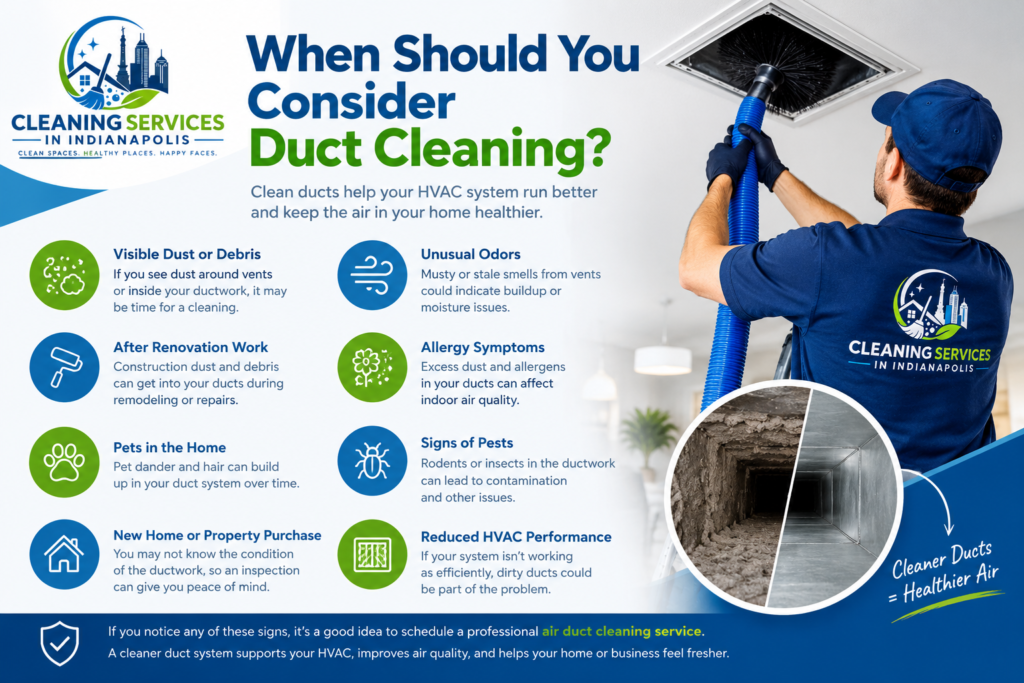
An air duct cleaning service may be worth considering when you notice:
- Visible dust or debris collecting inside accessible duct openings.
- Construction or renovation work that has left dust in the building.
- Evidence of rodents or insects inside the duct system.
- Dust buildup associated with a known problem in the ductwork.
- A recent property purchase where the system’s maintenance history is unclear.
- Debris that has entered the system following repair work.
Before booking an air duct cleaning service, check whether the issue may have another cause. Dust on furniture, for example, can come from outdoor air, clothing, pets, carpets, or ordinary household activity. A blocked filter or leaking duct may also need attention before cleaning is considered.
A technician should inspect the relevant areas and explain the reason for the recommended work. Photographs of accessible duct interiors can help property owners understand the condition rather than relying on broad claims about contamination.
Residential Duct Cleaning for Homes
Homes can collect different types of debris depending on the number of occupants, pets, flooring, local conditions, and daily routines. Properties that have recently undergone remodeling may also have dust that requires attention.
For homeowners, an air duct cleaning service can be useful when there is a clear reason to remove debris from the ventilation system. The work may cover accessible supply and return ducts, registers, grilles, and other agreed-upon components.
A suitable cleaning plan should reflect the actual layout of the home. Older properties, houses with additions, and buildings with difficult-to-reach ductwork may need a closer assessment before a technician provides a quote.
Homeowners can also support cleaner HVAC operation by replacing filters according to the manufacturer’s instructions, keeping return-air grilles clear, and arranging repairs when ducts are damaged or disconnected.
Commercial Duct Cleaning for Workplaces
Offices, retail spaces, and other commercial properties often have ventilation systems that differ from residential installations. The size of the building, operating hours, occupancy, and type of business can all affect the maintenance requirements.
A commercial air duct cleaning service should be planned around the building’s HVAC layout and operating needs. Before work begins, the property manager and service provider should agree on the areas included, access arrangements, scheduling, and any precautions needed to protect furniture or equipment.
Commercial property owners should ask for a clear description of the work. If a building has several HVAC units or separate ventilation zones, the quote should explain which systems will be addressed. This helps avoid confusion about what is and is not included.
How the Cleaning Process Works
The exact procedure depends on the duct system and the material present. A professional air duct cleaning service should begin with an assessment rather than applying the same process to every property.
A typical job may involve the following stages:
- Initial inspection: The technician reviews accessible ductwork, identifies visible debris, and discusses the property owner’s concerns.
- System preparation: Appropriate access points are identified, and nearby areas are protected where necessary.
- Debris removal: Suitable vacuum equipment and mechanical agitation may be used to loosen and collect material from the sections included in the job.
- Component review: The technician checks the agreed-upon registers, grilles, and accessible system components.
- Final checks: The work is reviewed, access openings are properly closed, and any separate issues found during the visit are explained.
Equipment matters because duct systems can vary in size and construction. Planet Duct has referenced equipment such as the Hypervac 220 and vacuum trucks in connection with its work. The appropriate setup depends on the job, access requirements, and the system being serviced.
A quality air duct cleaning service should also explain any limitations. For example, a technician may not be able to access every enclosed section without additional work. Property owners should know which areas were cleaned and whether any concerns remain.
What Affects the Cost?
The cost of an air duct cleaning service can vary from one property to another. A single price does not necessarily reflect the amount of work required in every home or commercial building.
Common factors include:
- The property’s size and duct layout.
- The number of HVAC systems or separate zones.
- The amount and type of debris present.
- Access to registers, ducts, and equipment.
- The cleaning methods and equipment required.
- Additional work requested by the property owner.
When comparing quotes, ask whether the price covers supply and return ductwork, registers, grilles, and any other components you expect to be included. Clarify whether inspection, access openings, repairs, or additional services cost extra.
A written estimate makes it easier to compare providers fairly. Be cautious of unusually low offers that later lead to pressure for expensive add-ons without a clear explanation of the problem.
How Often Does Ductwork Need Cleaning?
There is no single interval that suits every building. The need for an air duct cleaning service depends on the system’s condition, the amount of debris present, the building’s history, and whether a specific issue has developed.
Instead of arranging cleaning solely because a certain number of years has passed, inspect the system when there is a reason to do so. A property that has undergone major renovation may have different needs from a well-maintained home with no visible buildup.
Routine HVAC maintenance remains important. Follow filter replacement recommendations, keep outdoor equipment clear, and arrange professional checks when the system develops unusual noises, reduced airflow, or other operating problems.
Dust, Mold, and Indoor Air Concerns
Dust and mold are not the same problem, and they should not be treated with the same solution. An air duct cleaning service can remove suitable loose debris, but cleaning alone does not correct the moisture conditions that allow mold to grow.
If you suspect mold, the source of moisture needs attention. Possible causes include condensation, leaks, or excessive humidity. A qualified professional can help determine the appropriate next steps and whether additional assessment is needed.
It is also important to keep expectations realistic. Duct cleaning should not be presented as a guaranteed treatment for allergies, asthma, or other health conditions. Indoor air quality can be influenced by many factors, including ventilation, filtration, moisture, household products, and outdoor pollutants.
The U.S. Environmental Protection Agency (EPA) provides information about indoor air quality and duct cleaning. Property owners can use this information alongside an inspection of their own system when deciding whether cleaning is justified.
Dryer Vent Cleaning Is a Separate Task
Dryer vents carry warm, moist air from a clothes dryer to the outdoors. Lint can build up in this pathway and restrict airflow, which can increase drying time and create a fire risk.
Although it may be offered by the same contractor, dryer vent cleaning is different from HVAC duct cleaning. A technician should identify the dryer vent route, remove lint as appropriate, and check that air can discharge outdoors.
If clothes take longer than usual to dry, the dryer or vent becomes unusually hot, or lint collects around the outlet, arrange an inspection. Never assume that cleaning the HVAC ducts also means the dryer vent has been cleaned.
A/C Coils and Duct Sealing
Cooling coils are part of the HVAC equipment, not simply another section of the duct network. Dirt on a coil can affect heat transfer and system operation, but coil cleaning may require a separate service and must follow the equipment manufacturer’s instructions.
An air duct cleaning service does not automatically include coil cleaning, filter replacement, or furnace maintenance. Ask the provider to list each task separately so you understand the scope of the appointment.
Duct sealing is another distinct service. Leaks can allow conditioned air to escape into unconditioned spaces or permit unwanted air to enter the system. Products and methods associated with duct sealing include Aeroseal, while Duct Armor is associated with duct restoration and lining applications. Their suitability depends on the duct material, condition, and project requirements; neither should be assumed necessary without an assessment.
Choosing a Suitable Duct Cleaning Provider
When comparing an air duct cleaning service, focus on clear explanations, relevant experience, and a written scope of work rather than promises that sound too good to be true.
Consider asking these questions before scheduling:
- Which parts of the system are included in the quoted price?
- Will the technician inspect the ductwork before starting?
- What equipment and cleaning methods will be used?
- Are repairs, sanitizing products, or other add-ons optional?
- Will the provider explain any areas that cannot be accessed?
- Can the company provide details about its training, insurance, and service policies?
Industry resources can also help you assess a contractor’s claims. The National Air Duct Cleaners Association (NADCA) publishes information about duct cleaning practices, while the Institute of Inspection, Cleaning and Restoration Certification (IICRC) offers training and standards across relevant cleaning and restoration fields. You can also review a company’s profile and customer feedback through the Better Business Bureau (BBB).
Membership, certification, or a positive review should not replace questions about the actual job. The provider should be willing to explain what is needed and why.
Duct Cleaning Services in Colorado Springs and Southern Colorado
Planet Duct serves customers in Colorado Springs and surrounding parts of Southern Colorado. Depending on the service and location, its service area may include Falcon, Black Forest, Monument, Castle Pines, Castle Rock, Fountain, Security-Widefield, Pueblo, Pueblo West, and parts of Teller County.
If you are looking for an air duct cleaning service in one of these communities, confirm availability for your address and describe the issue you have noticed. Mention recent remodeling, visible debris, suspected duct damage, or other relevant details when requesting an estimate.
Providing this information helps the company understand your needs before arranging an inspection. It also gives you an opportunity to ask what the appointment will cover and whether any additional work would require separate approval.
Frequently Asked Questions
What does an air duct cleaning service include?
The work varies by provider and property. It may include cleaning agreed-upon sections of supply and return ductwork, registers, and grilles. Always confirm the included components before booking.
Will duct cleaning remove all dust from my home?
No. Dust enters homes from many sources, including outdoor air, fabrics, pets, and everyday activity. Cleaning ducts does not prevent new dust from entering or settling on surfaces.
Is duct cleaning the same as HVAC maintenance?
No. Duct cleaning focuses on removing debris from the parts of the ventilation system included in the job. HVAC maintenance may involve checking equipment operation, filters, electrical components, coils, and other parts of the system.
Should I book cleaning after a renovation?
Renovation work can introduce dust into a building, but the need for cleaning depends on the amount of debris and whether it has entered the duct system. An inspection can help determine the appropriate response.
Can I clean my ducts myself?
You can maintain accessible grilles and replace filters according to the manufacturer’s recommendations. Internal duct cleaning may require specialist equipment and access methods, particularly when the system is extensive or difficult to reach.
Make an Informed Decision About Your HVAC System
Clean ductwork is one part of caring for a heating and cooling system. Regular filter changes, moisture control, prompt repairs, and appropriate HVAC maintenance also matter. The right decision depends on the system’s condition rather than a one-size-fits-all schedule.
Before choosing an air duct cleaning service, ask for an inspection, a clear estimate, and an explanation of the work being recommended. For property owners in Colorado Springs and Southern Colorado, Planet Duct can be contacted to discuss available services, the areas covered, and the needs of a particular home or commercial property.