
Packing the boxes is the easy part of moving. The trouble starts once the truck is loaded and you’re standing in an empty kitchen, staring at an oven you haven’t scrubbed in two years, with the keys due back in the morning. That’s the moment move out cleaning services start to look like the smartest line in your budget. For tenants, the final clean can decide how much of the security deposit comes back. For sellers, it shapes how a buyer or an agent feels at the final walkthrough.
Whether you hire a crew or roll up your own sleeves, a few details separate a clean that passes from one that costs you. Here’s what those details are, and how move out cleaning services fit into each of them.
What Move Out Cleaning Services Really Mean
Move out cleaning services are a one-time deep clean of an empty home. They aren’t the weekly or biweekly tidy that keeps a lived-in place presentable, and they aren’t quite a standard deep clean either. The difference is the empty part. With the furniture gone, cleaners can reach every surface, including the insides of cabinets, drawers, closets and storage areas that regular visits skip.
The goal is simple: hand the place back close to move-in condition. Professionals work from the top down, so dust and drips never land on a surface that’s already finished. They begin with ceiling fans, light fixtures and the corners where cobwebs gather. After that come walls, doors, windows and trim, and the floors come last.
Most landlords expect the level of clean that move out cleaning services provide, and so do many purchase agreements. Some leases spell out exactly what’s required, down to a receipt from a company offering move out cleaning services, so read yours before you start.
Why the Security Deposit Is on the Line
A deposit feels like your money, but until the inspection is over it’s the landlord’s to release. Property owners usually walk through with a standard checklist and compare the unit against the move-in inspection report. Anything that goes beyond normal wear and tear can be charged against you.
It helps to know where that line sits. Small nail holes, light scuffs, faded paint and slightly worn carpet in busy spots count as normal wear. Large holes, deep stains, mold, heavy grease and broken fixtures count as damage. Landlords tend to forgive wear but not grime, and that gap is exactly what move out cleaning services are built to close. Rules differ from place to place, and in some regions a landlord can’t take cleaning fees out of certain deposits without filing a separate claim, so look up your local tenancy rules before you assume anything either way.
Sellers face the same test from another angle. Buyers and agents spot grime quickly. A clean home keeps the closing smooth and can help the resale value, while a dirty one gives the buyer a reason to ask for a credit.
What Professional Move Out Cleaning Services Usually Cover
Every company words its checklist a little differently, but most professional move out cleaning services cover the same ground:
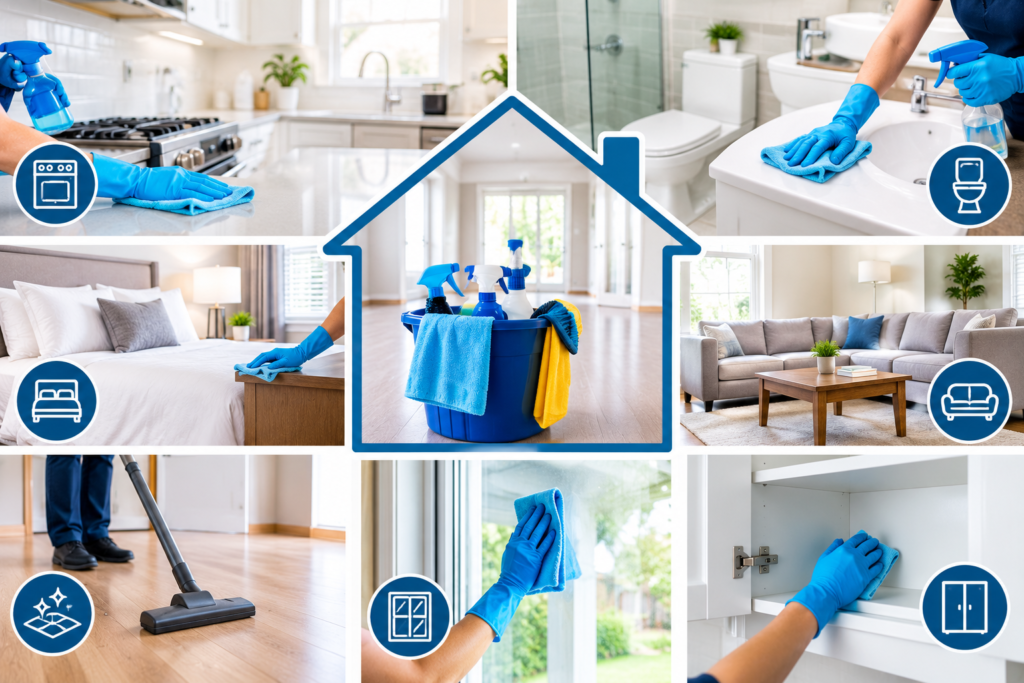
- Kitchen: oven, stovetop, range hood, fridge and freezer, microwave, dishwasher, cabinets, drawers, pantry shelves, sink, faucet, countertops and backsplash
- Bathrooms: toilet, tub, shower, glass doors, grout, faucets, showerheads, mirror, vanity, medicine cabinet and exhaust fan cover
- Bedrooms and living areas: closets, shelves, baseboards, door frames, window sills and tracks, blinds, light fixtures, switches and outlet covers
- Floors: carpets vacuumed, hard floors swept and mopped, corners included
- Extras many companies include: cobweb removal, laundry area, entryway, balcony or patio, air vents and trash removal
Carpet shampooing, interior windows and wall washing are sometimes extras. Ask before you book so the invoice for move out cleaning services holds no surprises.
The Kitchen: Where Most of the Work Hides
If you only have energy for one room, pick the kitchen. It holds the most grease and the most appliances, and landlords check it first. Professional move out cleaning services spend the most time in this room for the same reason.
Start with the oven. Pull out the racks, scrub the walls and the door glass, and don’t forget the broiler drawer. Baked-on grease is among the most common reasons a deposit gets trimmed. Next, degrease the stovetop, the drip pans, the range hood and its filter, and the wall behind the stove.
Empty the fridge and freezer completely, wipe the shelves and drawers, and clean the door seals. A box of baking soda left inside afterward helps with odor. Wipe the microwave inside and out, including the vent filter. For the dishwasher, scrub the rubber seal and the filter, then run an empty cycle with a cleaner.
Move on to the cabinets and drawers, inside and out, then the pantry shelves, countertops and backsplash tile. Scrub the sink, polish the faucet, and mop the floor, including the edges under the cabinets. If you can slide the fridge and stove away from the wall, do it. Crumbs and dust collect back there for months.
Bathrooms: Disinfect, Descale, Detail
A bathroom needs more than a wipe. Mold and mineral buildup are the two problems a quick pass won’t fix.
Scrub the toilet bowl, the tank, the base and the hinges behind the seat. In the tub or shower, work on the tile, the grout lines and the caulking edge, where mildew settles first. Glass doors usually carry soap scum and hard water spots, and white vinegar cuts through both. Descale the showerhead and the faucets, because mineral deposits stand out the moment a landlord shines a light on them.
Clean the vanity, the sink and the mirror until there are no streaks. Wipe inside the medicine cabinet and the storage under the sink, and take the cover off the exhaust fan to clear the dust. Mop the floor, including behind the toilet.
One habit worth borrowing from professional crews: keep a separate set of cloths and brushes for the bathroom so germs don’t travel from room to room. Ventilate the space too, especially if you use bleach-based cleaners, since the fumes build up quickly in a small room.
Bedrooms, Living Areas and Floors
These rooms look easy, but dust hides in the details. In bedrooms, start with the closets. Wipe the shelves, rods and interior walls, then vacuum the floor and corners. Clean the window sills and tracks, wipe the blinds, and go over the baseboards and door frames. Built-in drawers and cabinets need a wipe inside too, even when they’re empty. Dust settles where nothing sits.
In living areas and hallways, dust the shelving, mantels and built-ins. Wipe the light switches, door handles and thermostats, which collect fingerprints. Clean the windows inside, and if there’s a fireplace, take out the ash and wipe the surround.
Walls deserve a close look. Wipe away scuffs and marks, and fill small nail holes with spackle. Once it dries, sand it smooth and touch it up with matching paint. Remove hooks, command strips and adhesive residue as well.
Carpets should be vacuumed thoroughly, and stubborn stains may call for professional carpet cleaning. Hard floors get swept and mopped, including the corners and the strip where the bed stood.
The Spots Almost Everyone Skips
Every move out checklist has a hidden second list, the places people forget until it’s too late. A reliable crew that sells move out cleaning services checks every one of them.

- Baseboards and door frames. Dust leaves a grey line that a quick vacuum never reaches.
- Inside light fixtures. Globe covers collect dust and dead bugs, which show the moment the light goes on.
- Air vents and return grilles. They turn up in rental walkthroughs and home inspections alike.
- Behind and under appliances. The fridge, stove and washer hide crumbs and grime.
- Window tracks and blinds. Thick dust and grimy tracks take seconds for an inspector to spot.
- Garage, storage unit and balcony. Sweep them and take out everything that’s yours.
- Laundry area. Wipe the washer and dryer inside and on top, and clear the lint trap.
Replace burned-out light bulbs while you’re at it, and swap the HVAC filter if your lease asks for that.
DIY or Professional: Picking What Fits
Both routes work. The right one depends on your time, your budget and how much deposit is at stake.
| Factor | DIY | Professional crew |
|---|---|---|
| Cost | Low, mostly supplies | Higher, but one price for the job |
| Time | Several hours to a full day or more | Often a few hours |
| Quality | Depends on your effort and stamina | Consistent and thorough |
| Equipment | You buy or borrow it | Crew brings its own |
| Proof for the landlord | Your own photos | Receipt, and sometimes photos |
Doing it yourself keeps costs down, and a basic kit goes a long way:
- all-purpose cleaner and a disinfectant spray
- a degreaser for the oven and stovetop
- glass cleaner
- white vinegar and baking soda
- microfiber cloths, a scrub brush and a magic eraser
- a mop, a bucket and a vacuum
- rubber gloves, garbage bags and a step stool for high shelves
The catch is timing. You’ll be cleaning right after packing, loading and driving, when your energy is lowest. That’s exactly when the commonly missed spots get skipped.
Hiring move out cleaning services makes the most sense when your deposit is sizable, your schedule is packed, or your lease requires a professional clean with a receipt. Many companies that offer move out cleaning services also handle the move-in clean at your new home, so you walk into a fresh start instead of someone else’s leftovers.
When to Book the Clean
Timing matters as much as the checklist. Book move out cleaning services two to three weeks ahead of time, and sooner if your lease ends at the end of the month, when slots fill fast.
The clean itself belongs after the furniture is gone and before you hand over the keys, ideally a day or two before. Cleaning around furniture means you’ll miss the places landlords check first, like under beds, behind couches and inside closets. An empty room also shows every scuff and dust bunny that a couch was hiding.
A rough timeline looks like this:
- Two to three weeks out: tell your landlord the move-out date, check the lease for cleaning rules, and book move out cleaning services if you’re hiring.
- One week out: take items off the walls, fill nail holes, and buy supplies if you’re going DIY.
- One to two days out: clean the empty unit from top to bottom.
- Handover day: do a final walkthrough, take photos and return the keys.
If you’re moving into another home, clean it before the first box comes inside. An empty unit takes about half the time, and you won’t be working around your own belongings.
Proof: How to Document the Result
Proof protects you if there’s a dispute later. After the clean, walk through every room and take timestamped photos. Include the inside of the oven, fridge, cabinets and closets. Shoot a short video as you go and say out loud what you’re showing, since it gives more context than photos alone.
Keep receipts for any professional cleaning, because they show a good-faith effort. If you use move out cleaning services, ask the company for dated photos and a receipt. Email everything to yourself so there’s a verifiable date on it. If your landlord agrees, ask for a joint walkthrough, so both of you agree on the condition before you leave. Get anything they say about the unit’s condition in writing, and keep your messages in one place.
Use natural light or a bright flashlight when you check your own work. A low-angle beam shows streaks, dust lines and missed corners that normal lighting hides.
Choosing a Company for Move Out Cleaning Services
Not every provider of move out cleaning services runs the job the same way, so ask questions before you book:
- What exactly is included? Check the oven, fridge, cabinets, windows and baseboards.
- Does the crew bring its own supplies and equipment?
- Are the cleaners insured and vetted?
- Will they send photos afterward or give you a receipt for your landlord?
- Is there a re-clean if something gets missed, and how long do you have to ask for it?
- Can you hand them a custom checklist based on what your landlord inspects?
- Is the quote based on your home’s size and condition, or is it a flat price over the phone?
Ask for an estimate from a company that has looked at the job, or at least asked about bedrooms, bathrooms and current condition. A quote for move out cleaning services that sounds too low often leaves out the oven, the cabinets or the windows. Customer testimonials help, and so does a satisfaction guarantee in writing.
Mistakes That Cost People Their Deposits
Even people who book move out cleaning services can lose a deposit by skipping the final check:
- Rushing through without a checklist
- Cleaning around furniture instead of after it’s gone
- Skipping the oven, fridge and microwave interiors
- Leaving soap scum, mildew or dirty grout in the bathrooms
- Forgetting window tracks, blinds and light fixtures
- Leaving adhesive residue from hooks, stickers and posters
- Not patching nail holes or touching up paint
- Not taking photos of the finished result
- Leaving trash or belongings in the garage, balcony or storage
What Affects the Price of Move Out Cleaning Services
Prices for move out cleaning services usually depend on the size of the home, the number of bathrooms, how dirty it is and what’s included. A studio costs less than a three-bedroom house, and a unit with heavy grease, pet stains or years of buildup takes longer. Extras such as carpet cleaning, interior windows and wall washing raise the quote. Prices also vary by city, so ask for a quote tied to your address.
For many tenants, move out cleaning services cost less than the deductions an untidy unit can trigger, which is why some people treat them as cheap insurance on the deposit. A good checklist, an empty unit and a couple of hours with a flashlight go a long way. Done properly, move out cleaning services leave you with a place you’d be proud to hand over.